Your front desk is where hospitality happens — and where work piles up. Staff are expected to handle the moments that matter most while juggling phone calls, guest questions, booking requests and routine tasks. Every interruption pulls them away from the guests right in front of them. Hotel front desk automation in the right places changes that equation by taking high-volume administrative work off your team’s plate while keeping the magic of hospitality alive.
In this guide, we explain how hotel front-desk automation works, which front desk tasks are ideal for automation and where hotels can see the fastest return on investment. We also look at how hospitality-specific AI is moving beyond simple answers to complete workflows, such as handling calls and guest messages as well as managing bookings and identifying revenue opportunities.
Key highlights:
Hotel front-desk automation is the use of technology and AI to handle repetitive front desk tasks such as answering common questions, managing calls, taking reservations and processing routine guest requests.
Automating high-volume work gives front desk teams more time for in-person service while improving response speed and consistency.
The fastest ROI often comes from guest communications, where AI can answer calls, messages and webchats while capturing booking opportunities and delivering personalized service around the clock.
Canary Technologies brings hospitality-specific AI and guest engagement tools together to automate front desk workflows, drive revenue and give hotel teams more time to focus on guests.
What Is Front-Desk Automation in Hotels?
Front desk automation in hotels is the use of technology to handle repetitive front-desk tasks with less manual staff intervention. This includes routine activities such as answering common guest questions, managing requests, processing information and handling other high-volume administrative work.
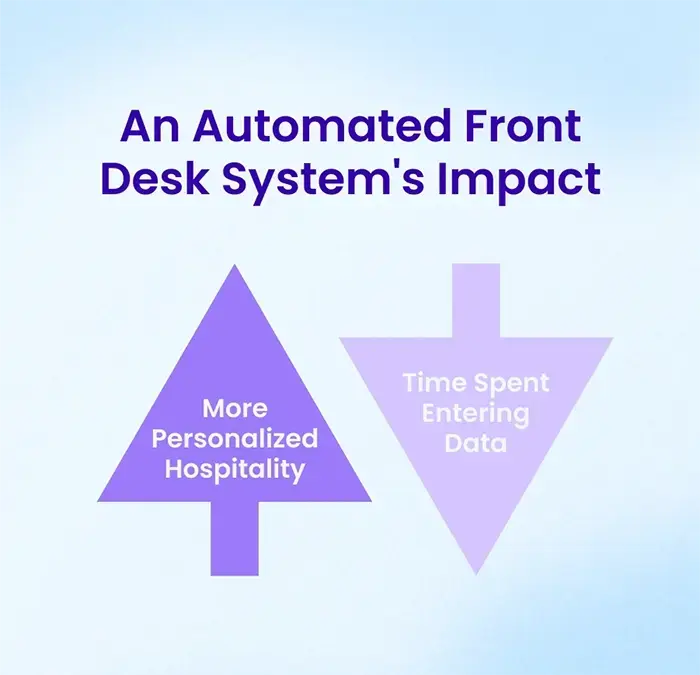
Systems that were once limited to static, spreadsheet-style logic can now manage far more complex tasks, cutting the time front-desk staff spend feeding data into the system and giving them more support in return. This is thanks to AI — and it’s why 82% of hotels are expanding its use.
How Does an Automated Front Desk System Impact Hotel Guest Experience?
The right kind of front-desk automation is invisible to guests, yet it removes unnecessary steps and delays from common interactions. Instead of requiring guests to wait for staff to complete routine tasks, automation gives them faster ways to check in, get answers, make requests and complete other parts of their stay. It’s as though everything and everyone is available just when the guest needs them.
The result is a more convenient experience that creates more room for the human side of hospitality. By handling repetitive work in the background, automation gives staff more time to be present with guests, focus on personal service and address complex guest needs.
Faster, Frictionless Guest Check-In
Check-in sets the tone for the rest of the stay — and for too many guests, that still means a long wait in the lobby, nudging luggage forward a few inches at a time. Automated, mobile-first processes let guests complete routine steps before they reach the front desk, reducing paperwork and speeding up arrival for everyone in line. With contactless check-in and mobile keys, guests can even complete the process on their own devices instead of waiting in line.
A smoother arrival gives guests more control over how they enter the property and begin their stay, while the hotel still meets every requirement. With mobile-first check-in, guests can:
Complete registration before arriving
Reduce paperwork and manual steps for staff
Spend less time waiting at the front desk
Have more control over the arrival experience
Shorter Wait Times at Arrival
A long line at the front desk is as disappointing to arriving guests as it is inconvenient for in-house guests who just want to report an issue or ask about laundry service. By automating routine tasks, staff gain crucial time they can choose to allocate where it matters and when it matters most.
This is as valuable during peak arrival periods, when multiple guests may need assistance at the same time, as it is during night shifts, when the night auditor may be the only one on site and handling all interactions. By shifting routine interactions to automated processes, hotels keep the lobby moving while giving guests more access to staff. The benefits show up on both sides of the desk:
Bottlenecks are reduced during peak check-in periods
Staff has more time for complex guest requests
Routine processes continue moving in the background
A calmer, more efficient arrival experience
More Personalized Guest Communication
Guest communication does not stop at check-in: questions and requests pop up unexpectedly and needs change over the course of the stay. Automated communication gives guests a reliable line to information and a fast track to a staff member when needed, while reducing the number of routine interactions staff manage manually.
Modern hotel communication can also make interactions more relevant by using guest context to deliver timely information and offers. For guests, this means a more individual, seamless experience. Automated communication helps hotels:
Provide faster responses to common questions
Deliver information when guests need it
Personalize communication based on guest context
Free staff to focus on higher-value and personalized interactions
Seamless Payments and Digital Authorizations
Payment-related processes are a well-known headache for everyone involved. When guests pay for a coffee by tapping their phone, event organizers wonder why they still have to complete paper forms to pay for a bridal shower. Automating payment workflows reduces paperwork and makes it easier to collect and manage payment information securely.
Digital authorizations transform clunky payment steps for card-not-present transactions into digital workflows, so staff spend less time chasing forms and more time serving guests. Automating these workflows helps hotels:
Reduce manual payment administration
Replace paper-based authorization processes
Make transactions easier to manage
Become PCI-compliant and reduce chargebacks
Consistent Service Across the Guest Journey
Guests reasonably expect a hotel will know them better by the time they check out, since they interact with the hotel from the moment they book until the moment they leave. That’s why each touchpoint needs to feel connected. Automation creates more consistent processes across interactions while reducing the gaps that occur when teams manage requests as isolated incidents.
A connected guest journey also gives staff greater context as guests move through their stay. The goal isn’t to replace personal hospitality but to remove repetitive work so teams can spend more time delivering it. A connected guest journey lets hotels:
Create more consistent guest interactions
Connect touchpoints from pre-arrival through post-stay
Reduce friction between different stages of the stay
Give staff more context for personalized service
Automating Front Desk Tasks in Hotels: Step-by-Step Process
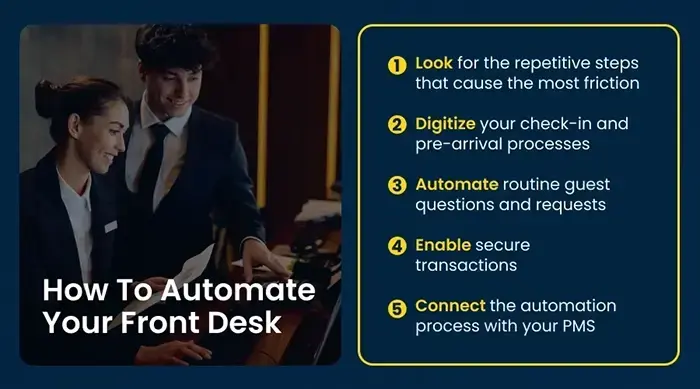
For front-desk automation to work, start with the right workflows before evaluating any new tools. Step 1 is to identify where staff spend the most time on repetitive work, then introduce automation in stages that improve efficiency without adding friction for guests.
A gradual approach also makes adoption easier for hotel teams. By automating high-volume processes first and connecting each new workflow to the hotel’s existing systems, teams acclimatize to new practices and gain trust in new processes.
Step 1: Identify High-Friction Front Desk Tasks
Start by looking at where front desk teams spend the most time and where guests experience the most friction. Review recurring questions, manual processes, peak arrival periods and tasks that require staff to move information between systems. These tasks usually mean more clicks and screen time for staff and less eye contact with the guest. These areas often provide the clearest opportunities for automation.
Prioritize tasks that are repetitive, high-volume and predictable. Automating these workflows first gives teams an immediate time-saving boost while building a trusted foundation for more advanced automation later. Here's what to look for:
The most common guest questions and requests
Repetitive administrative tasks
Bottlenecks during check-in and peak periods
Workflows with clear, repeatable steps
Step 2: Digitize Check-In and Pre-Arrival Processes
The arrival experience is a natural focal point because it combines several routine tasks, from registration to collecting guest information. Digitizing these steps lets guests complete more of the process before they even reach the lobby, taking the administrative strain out of the first on-site interaction. A connected hotel arrival experience creates a smoother transition from booking to welcome.
Hotels do not need to automate every part of arrival at once. Begin with the steps that cause the most friction, then expand as teams and guests become accustomed to the new workflow. With each step, staff can be more present for guests who need or prefer their assistance. This step focuses on how to:
Digitize registration and pre-arrival tasks
Give guests more control over the check-in process
Reduce paperwork and manual data entry
Keep staff available for guests
Step 3: Implement Automated Guest Engagement
Guest communication is a near-constant demand on front desk teams. With 20% to 40% of calls going unanswered, it’s also one of the clearest opportunities for automation. This makes it another strong automation focus area. Automated guest engagement can handle routine questions and requests across the guest journey, giving travelers faster access to information while keeping staff more available and present.
As these workflows mature, automation can move beyond answering questions to completing routine requests. The goal is to provide timely service without requiring staff to handle every interaction, while preserving a clear path to human support when a situation requires it. Automated engagement makes it possible to:
Respond to common guest questions
Provide faster service across the guest journey
Handle routine requests with less staff intervention
Escalate complex or sensitive interactions to staff
Step 4: Enable Secure Transactions
Payment workflows for anything beyond individual rooms or food often involve manual forms, data entry and awkward follow-up from hotel teams. Digitizing these processes reduces administrative work and creates a more consistent and secure way to manage transactions. Prioritize any processes where paper-based tasks create unnecessary delays or security risks.
An automated payment system should make the experience easier and more secure for both guests and staff, with fewer manual steps to manage while maintaining appropriate controls around payment information. Digitizing payments enables hotels to:
Replace manual payment paperwork with digital workflows
Reduce repetitive data entry
Streamline payment-related processes
Build security into automated transactions
Step 5: Integrate Automation with the Hotel PMS
Automation delivers more value when it connects with the systems hotel teams already use. Integrating front-desk automations with the property management system (PMS) allows relevant guest and reservation information to move between systems without staff entering the same data repeatedly.
This integration also creates the foundation for more advanced automation. When systems can communicate, automation can move from handling individual tasks to coordinating actions across the guest journey. That makes integration an important consideration when evaluating any front-desk automation strategy. PMS integration puts hotels in a position to:
Connect automation with the hotel PMS
Reduce duplicate data entry
Keep guest and reservation information consistent
Build a foundation for end-to-end automated workflows
Top AI Tools for Hotel Front Desk Automation
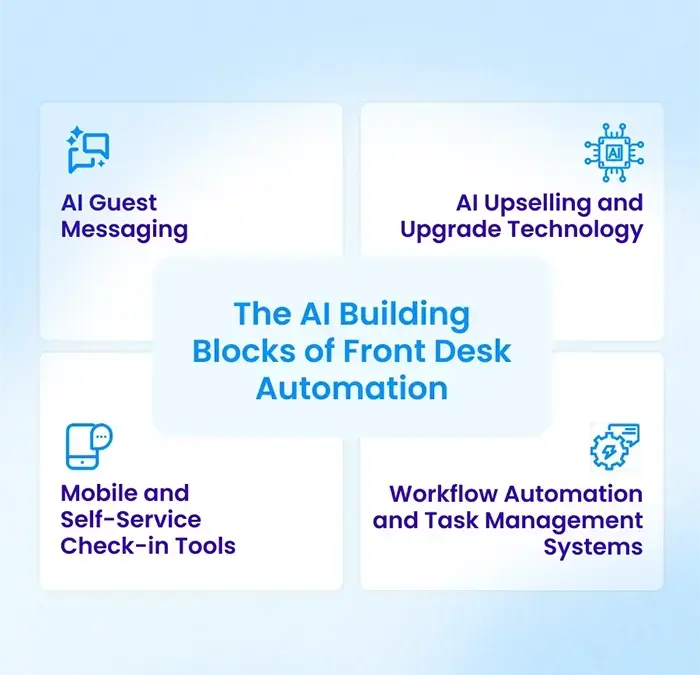
AI-powered front-desk tools are increasingly taking on tasks that once required constant staff attention. The most useful technologies focus on high-volume tasks such as guest communication, check-in, payments and upselling, giving teams more time to focus on non-standard requests.
Not every aspect of the front desk needs to be automated. Guests' expectations, the property's current technology stack and the property's workflows all inform the right mix of tools. Look for solutions that reduce manual work, integrate with core hotel systems and maintain a clear path to human support.
AI Guest Messaging Platforms
AI guest messaging platforms automate routine guest conversations. They can respond to common questions, provide property information and handle routine requests without requiring staff to manually respond to every message.
This gives guests faster access to information while reducing the volume of repetitive messages reaching the front desk. Crucially, more advanced systems can use guest and property context to make interactions more relevant while escalating requests that require staff involvement. These platforms give hotels the ability to:
Answer frequently asked guest questions
Provide faster responses across the guest journey
Automate routine guest requests
Escalate complex interactions to hotel staff
Mobile and Self-Service Check-In Tools
Guiding new arrivals toward mobile or self-service check-in is a task AI handles well: it can manage timely messages, follow-ups and instructions. With the check-in tool in place and AI to communicate and guide guests to the option, busy work quickly moves away from the front desk.
For properties that want to extend self-service into the lobby, a self-service kiosk gives guests another way to complete routine tasks without waiting for an available agent. And while signs work well, AI-powered pre-arrival messages can also ensure guests know to seek out these options before they ever join a line. These tools help hotels:
Digitize registration and arrival steps
Manage pre-arrival communication
Guide guests towards mobile and self-service check-in options
Reduce front desk bottlenecks during peak periods
AI Upselling and Upgrade Technology
AI upselling technology identifies opportunities to offer relevant upgrades and add-ons throughout the guest’s stay, relying on comprehensive guest data that the average team member doesn't always have on hand. Rather than leaning on staff to manually identify and present every offer, automated systems act on relevant opportunities at appropriate points in the booking process or stay.
The most effective approach is contextual, not generic. An offer should match the guest’s needs and timing, be valuable to the guest and make it easy to accept what is also an additional revenue opportunity for the hotel. Hotels looking to automate this process can explore dynamic hotel upsells as part of a broader front-desk automation strategy. This technology allows hotels to:
Present relevant upgrades and add-ons
Automate offer delivery
Reach guests at timely points in the journey
Create incremental revenue without adding manual work
Workflow Automation and Task Management Systems
Workflow automation and task management systems connect processes across different parts of the business — for example, a breakfast charge at the restaurant can trigger a lunch-credit message once it hits the PMS. Automation can trigger the next step in a workflow and route tasks to the appropriate team. It acts as an agentic wayfinder, directing each process to its next step.
This becomes increasingly valuable as hotels adopt more advanced, agentic AI. The goal is to move from automating individual tasks toward connected workflows that span systems and departments. Integration with the hotel tech stack is critical to making this possible. These systems allow hotels to:
Automate repetitive operational workflows
Route tasks to the right team
Reduce manual handoffs between departments
Connect front desk processes with other hotel systems
Implement an Automated Front Desk with Canary
Canary brings front-desk automation together across the guest journey, connecting hospitality-specific AI with the systems hotel teams already use. By automating repetitive, high-volume tasks and moving beyond simple answers to end-to-end workflows, Canary gives staff more time to focus on the guest interactions that matter most. The result is a more efficient, responsive operation that improves service while creating more opportunities to drive revenue.
With Canary AI solutions, hotels can automate key front desk interactions while providing a clear path to human support when guests need it. Key capabilities include:
AI Voice: Answer inbound calls, manage routine requests and capture booking opportunities that might otherwise be missed.
AI Guest Messaging: Automate guest communication, answer common questions and handle requests across the stay.
AI Webchat: Provide instant answers to guest questions during the booking and discovery process.
AI Agent Studio: Build and deploy custom AI agents and workflows tailored to specific hotel operations.
Mobile and self-service experiences: Digitize arrival and other routine guest touchpoints to reduce front desk workload.
Automated upsells: Surface relevant upgrades and add-ons at the right points in the guest journey to create additional revenue opportunities.
Book a demo today to see how Canary can help you implement hotel front desk automation for your property.







.avif)

